|
| Haworthia limifolia |
 |
| Gasteria batesia |
One of the most beautiful aspects of plants is the pattern of their leaves. I'm not just talking about variegation, but also the arrangement and texture. Some of the most amazingly patterned plants are succulents. Haworthias and gasterias are a couple of my favorites.
Haworthia limifolia, or washboard haworthia definitely looks like a washboard, thus the common name. It's leaves are also arranged in a swirled pattern. I love it!
Gasteria batesiana is a small plant with rough, warty leaves. Gaster, the Greek word for stomach, refers to their flowers, which resemble the shape of a stomach. Both plants are native to South Africa, but prefer a bit of shade, gasterias taking on a reddish tinge when in too much sun.
Most people think of sansevierias as the mother-in-law's tongue or snake plant. (Who comes up with these common names?) These names apply to the tall, sharp leaves of the most common variety of snake plant. I love the upright varieties, but my favorite is the bird's nest sansevieria. This variety forms a low rosette, thus the common name. Golden hanii is a beautiful variegated form, and quicker than you think, forms a cluster of these rosettes.
' |
| Sansevieria 'Golden Hahnii' |
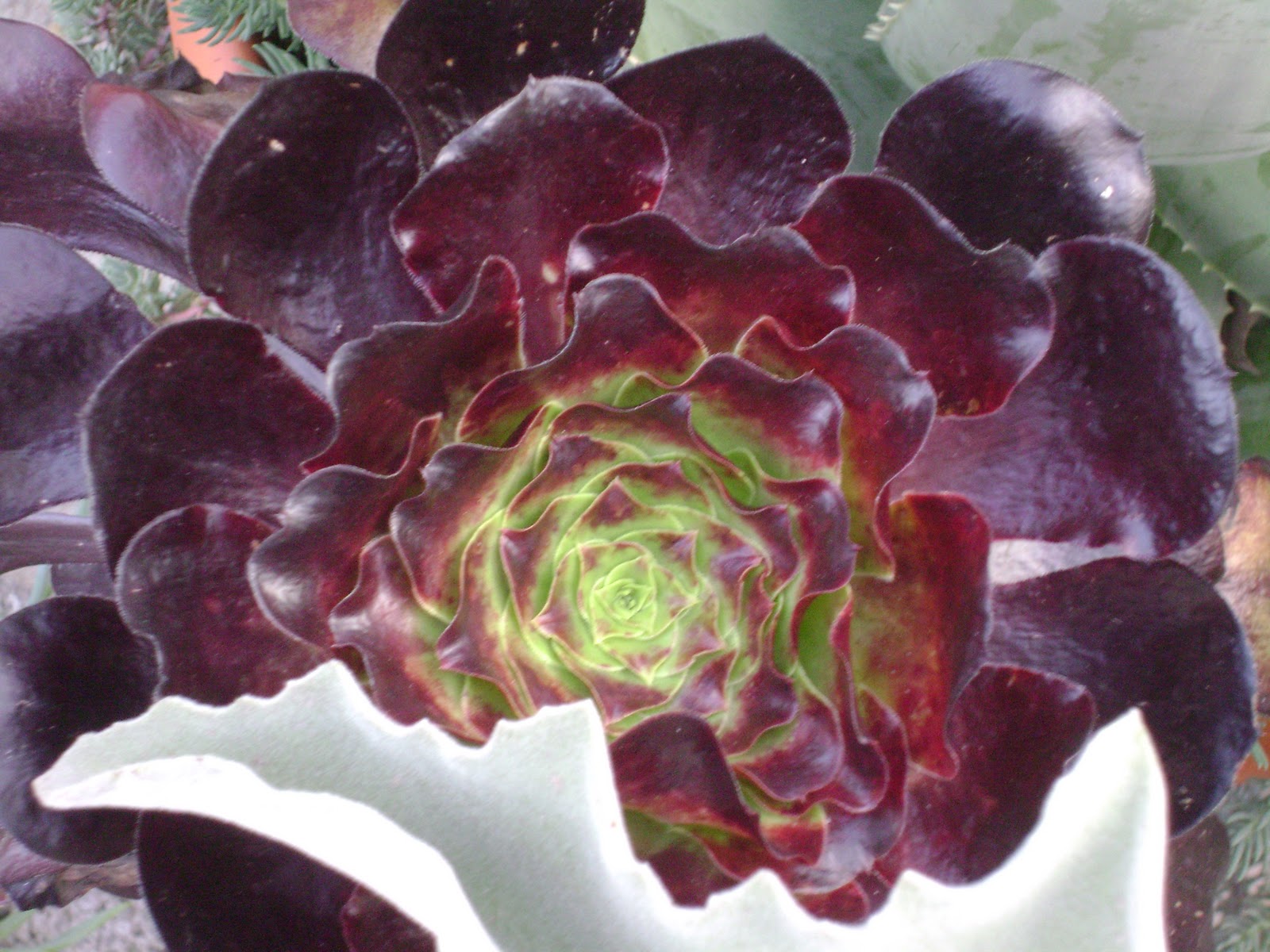
Aeonium 'Kiwi' is a gorgeous plant, especially in plenty of sun, as that is when its red edged leaves are at their most vibrant. Aeonium 'Schwarzkopf' is a beautiful dark burgundy, almost black in full sun. These very popular succulents are a great addition to your indoor plant family. They will lose some of their vibrant color indoors, though, the burgundy of the 'Schwarkopf' turning to a dark green, and the 'Kiwi's' red edge fading to pink or even disappearing.
 |
| Aeonium 'Kiwi' |
 |
| Aeonium 'Schwarzkopf' |
 |
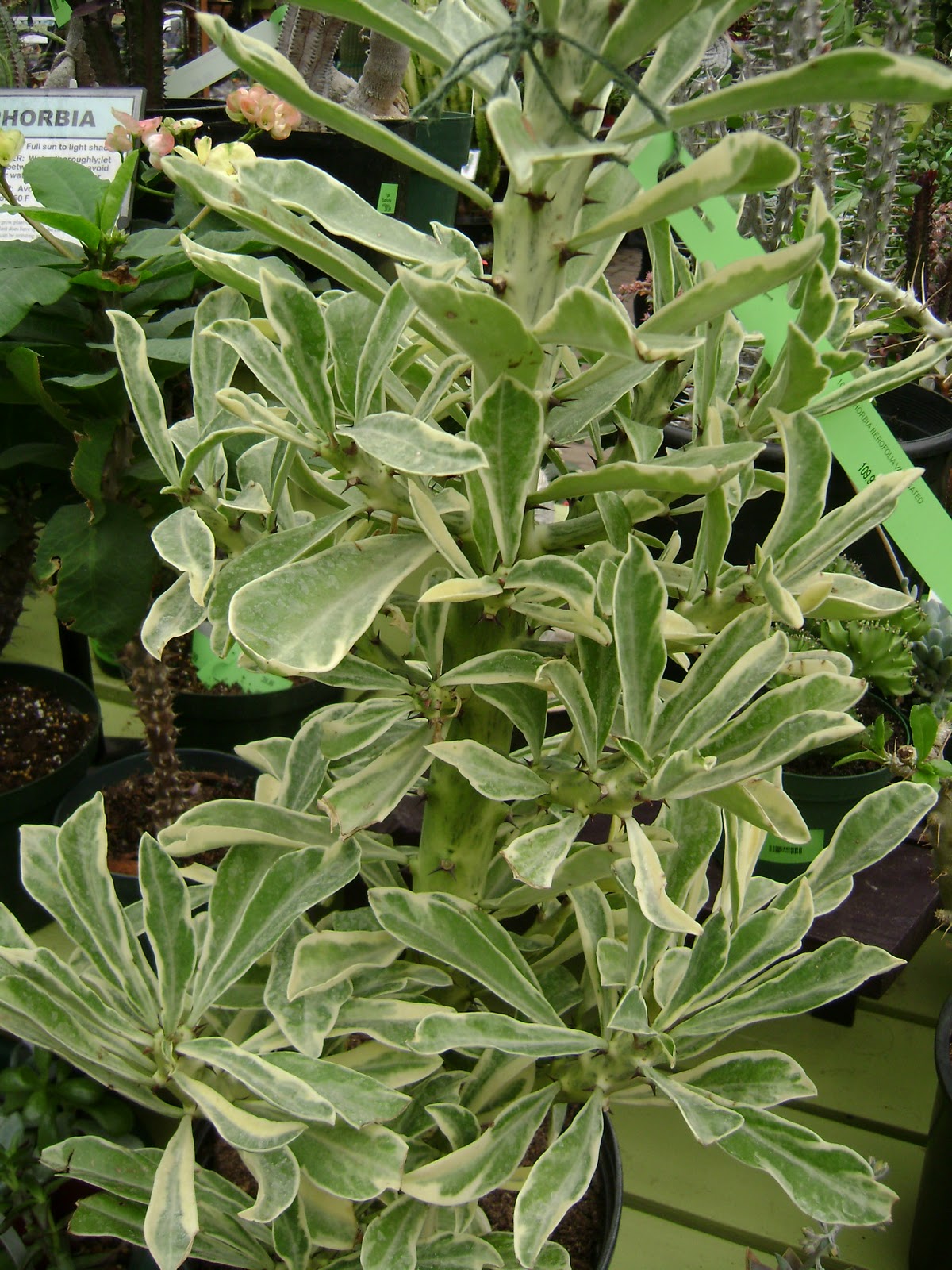
| Euphorbia nerofolia variegata |
The euphorbia nerofolia variegata not only has two toned foliage, but the stem is also variegated to match the leaves. I saw this plant in a garden center in Chicago, but the over $100 price prevented me from taking it home. (I like being married.)
Let's move on to some non-succulent plants. Piper crocatum has beautiful marbled foliage. The unique feature of this plant though, is the sunken vein areas, which gives it a quilted appearance. It also has a purplish tinge on the backside of the leaf. This vining plant would prefer to be in a humid conservatory with ample warmth, but the beauty of the plant makes it worth a try in your home.
 |
| Piper crocatum |
 |
| Microsorum thailandicum |
Two ferns that are interesting and extremely unique are the oil fern and the crocodile fern, both surprisingly, in the same family.
The oil fern, Microsorum thailandicum, is native to Thailand as its name implies. It is ephphytic, and looks as if it's been dipped in metallic blue paint. It needs to be kept humid to keep this unusual coloring. The one shown is in the fern room at the Lincoln Park Conservatory in Chicago, growing in near perfect conditions. The crocodile fern, is fairly new to the market. Its leaves have the appearance of crocodile skin. It can tolerate low light, but would also like some extra humidity and evenly moist soil. I have mine growing in an East window and its doing great. The one pictured is also in the Lincoln Park Conservatory.
 |
| Crocodile fern~ Micorsorum musifolium 'Crocodyllus' |
I could go on forever. There are endless choices out there, so next time you are shopping for a plant, pay attention not only to the color and shape of the leaves, but the texture also. These kinds of plants, with warts, crocodile skin, and blue metallic leaves are also a great way to interest children in the wonderful world of plants. They are the next generation of plant lovers and we need to get them involved when they are young.