Showing posts with label Cleveland Botanical Garden. Show all posts

Friday, April 10, 2015

Fire Lily

Clivia in bloom at Krohn Conservatory in Cleveland, Ohio
I have a Clivia blooming in my house, right now! Finally! I have had it for years and have been very disappointed that it has never flowered. I've heard everyone's tips and tricks for making them bloom, but it hasn't worked for me until this year. I was told that a cold, dry period would make it bloom, but I have a friend who has one in a sun room that is warm all the time and her plant blooms beautifully. Mine resides on the floor in my sun room which has an unheated brick floor. I didn't water it much this winter. Is this the reason it finally bloomed? I don't know. It's been in the same place for years but it finally decided this was the year. It was given to me by a customer at our nursery and I left it in the container it came in as I know they like to be root bound. It was staked and twist tied in a huge plastic pot. I really wanted to transplant it to a more attractive pot, but left it in the pot for the well being of the plant. Of course, I removed the twist ties and stakes, as it really didn't need it. I think they were trying to contain the size, but I just let it do its thing.
My Clivia on March 12th, 2015


My Clivia on March 20th, 2015


My Clivia on March 30th, 2015


Clivias are from warm, moist forests of South Africa. It has the common names of Fire and Natal Lily. The name fire lily is obvious, and the Natal lily is so called because it is from the Natal region in South Africa. The one you are most likely to find is Clivia miniata. Most have orange flowers, but yellow is also available. The yellow flowering varieties were very rare not so long ago, and very expensive. Now they are more available and definitely more affordable. They are in the Amaryllidaceae family, closely related to Amaryllis or Hippeastrum. The leaves look just like amaryllis leaves and they are both monocots. Monocots have foliage with parallel veins and include plants such as orchids, lilies, daffodils, iris, tulips, and cannas. Clivias are clump forming with dark leathery, long leaves and make  great houseplants, because they reside in the shade in their native habitat. To initiate flowering they must have bright light in our homes. They have very thick, fleshy roots and are best left undisturbed until they are almost breaking the pot. They hate to be re-potted and divided  and may not bloom the year after re-potting. Use a very well drained soil to replicate their native soil conditions. If the potting mix is kept too wet it will result in rot which will appear as pale green or bright orange cankers on the leaves. The Clivia would prefer to be on the dry side because of its fleshy roots. 
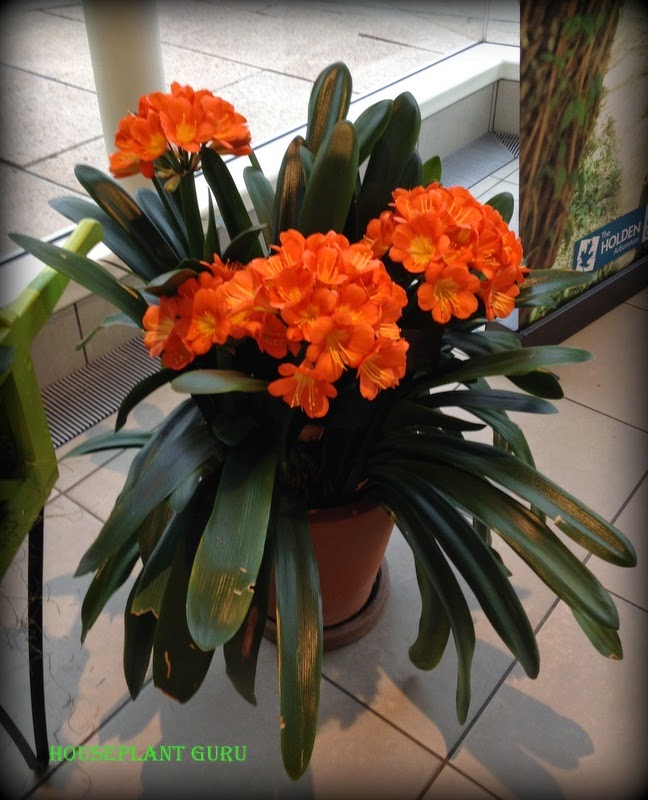
Clivia at Krohn Conservatory in Cleveland, Ohio
Where did the Clivia get its name. It was named by John Lindley of Kew in 1828 in honour of the Duchess of Northumberland, Charlotte Florentia Clive (1787-1866). She was born into a plant loving family and was one herself. The Clivia was first cultivated and brought into flower in Great Britian in her garden. The plant name should be pronounced with a long "í" (Clí-via) to commemorate her name. 
I'm still not sure exactly how I got my plant to bloom, but I'm not complaining, and hopefully it will bloom again next year.  


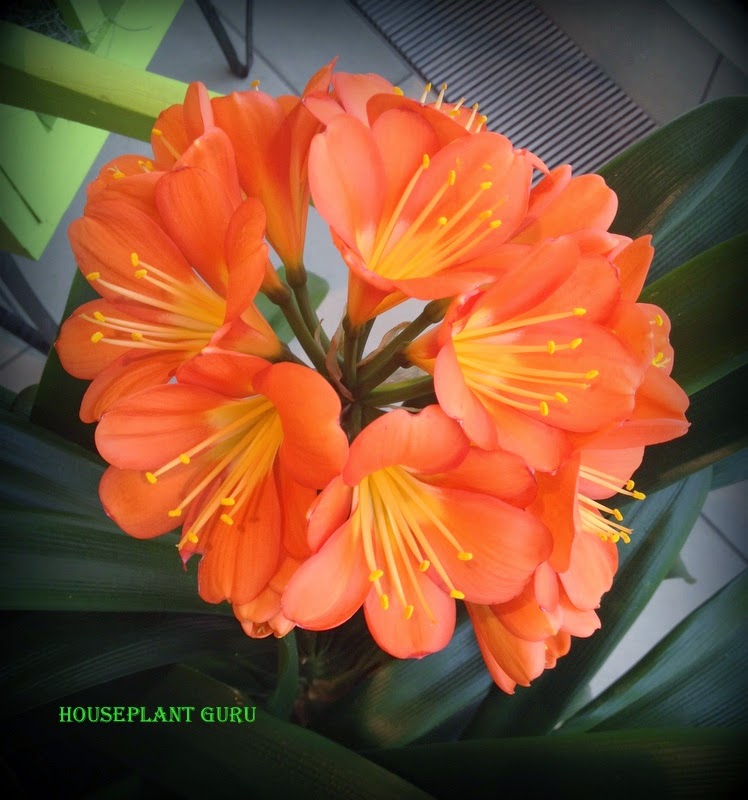
Close up of an individual flower


Yellow Clivia at Longwood Gardens, PA


This yellow Clivia is beautiful at Longwood Gardens. I had never seen one before. The yellow is gorgeous, but I prefer the orange. Then again, I wouldn't turn one down.


Variegated Clivia at Longwood Gardens, PA


Who wouldn't love the variegated foliage of this Clivia on the right. I wouldn't care if it never bloomed. While researching this plant, I found the site of the North American Clivia Society.There are some beautiful plants on their site. Check it out.


Clivia in bloom at Longwood Garden, PA

Thursday, March 26, 2015

Visiting Costa Rica (by way of the Cleveland Botanical Garden)

As I moved out of the Spiny Desert room, I entered into a humid, cloud rain forest. The birds were chirping, the butterflies fluttering, and the waterfall splashing. It was magical!


I love the added movement of the butterflies in a conservatory. They flutter by as if they haven't a care in the world. It is hard to get them to sit still for a picture...

The orchids were beautiful!


Encyclia cordigera
Tillandsia usneoides or Spanish moss


The bromeliads and other epiphytes were literally dripping off the trees.


Tillandsia usneoides up close


Bromeliad
Bromeliad flower


Small bromeliads attached to hanging vines


A Tillandsia clump growing on a tree branch

Colorful bromeliads attached to a tree branch in the canopy


My favorite Bromeliad attached to a tree trunk - love the color!
Looking up at the tree the catwalk surrounded


So what is a cloud forest exactly? I've discovered that it is cool in the highlands of Costa Rica. (This room really wasn't sweltering hot.) Clouds from the Caribbean sweep up over the mountains and cover them in mist and rain. Many times while I was in this forest, mist (which were actually pretty big drops) would come out of the ceiling and rain down on all the plants and me. At least they use purified water. Thus, by the time I left I had fuzzy, frizzy hair. Who really cares, anyway, when surrounded by such amazing beauty?


The best part of this room is being able to climb up (there were stairs-I did not climb this tree) into the canopy 25 feet above on a catwalk. Looking down on top of the plants is such a different view of the forest.

Mist machines


Looking down on the bromeliad covered tree branch. The picture below is looking up at the same branch from the floor.


Bromeliad tree from below


Looking down on the waterfall below


The were beautiful vines blooming, but you wouldn't know it unless you climbed up to the canopy catwalk. They were growing up the poles of the catwalk and then along the railings.Almost  everything in the rainforest that was flowering was there for the butterflies and birds.


 Blooming vine
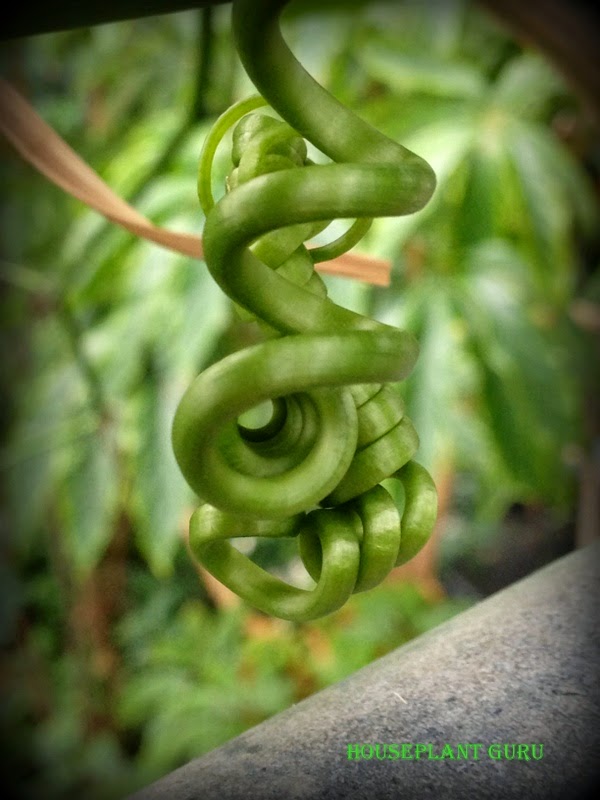
Loved this curly tendril on one of the vines

Blooming vine
Petrea volubilis - Queen's Wreath or Bluebird Vine

 
Enormouse Papaya tree
Jatropha integerrima or spicy jatropha


Rondeletia leucophylla or Panama Rose


The Panama rose on the right, is sweetly fragrant and the butterflies love it!


Asplenium nidus or bird's nest fern
I'll leave you with my favorite picture. This spore covered bird's nest fern with the sun shining through it is so gorgeous. It is growing in a bed of footed ferns. I have posted more pictures of the Cleveland Botanical Garden on my Pinterest board here.

Remember, visit your local conservatory often. You never know what new things will be blooming and changing.

Monday, March 23, 2015

Cactus and Succulents in Cleveland

Clivia


I went to the Cleveland Botanical Garden on Saturday for the Midwest Cactus and Succulent show and sale. I'd never been to the garden before and was excited to go.  So, I jumped in the car and three hours later, I arrived. I was greeted by the Spring Show, which I wrote about here. I immediately headed for the cactus and succulent show room. On the way, I passed this gorgeous Clivia


This Lewisia greeted me as I entered the show. I love orange! 


Of course, I headed to the sale room first! I tried to stay away, but the prices were so reasonable and the plants so tempting!!!!


The best part of the show and sale, though, is the show. Members of the Midwest society bring in their prize plants to show us how they should look when grown very well. All the plants were perfect! This display above was one man's caudex (swollen stem) forming Pacypodiums.  As they rest in the winter, and lose their leaves, they were pretty bare for the show. Now that Spring has arrived, the leaves will show up soon. 

Mammallaria hahniana


I love this hairy Mammallaria hahniana! Wow, is it amazing!
One could almost pet it if you didn't know that under all that hair are spines.


Here is another Mammillaria. The yellow middles of these globe shaped plants make it more interesting


Gasterias
This member above collects Gasterias.

Aloe 'Rooikappie'
Once again, some orange flowers on this Aloe above, caught my attention. The sign said the name "Rooikappie' means 'Little Red Riding Hood'.


Aloe 'DZ'


 The new Aloe hybrids are very hot right now. They come out with new ones all the time.Who wouldn't like the red and pink warty growths on these plants? They are so unique!


Aloe 'Christmas Carol'


Aloe 'Viper'


How cool are the spines on this Astrophytum? The picture below is a close up of the spines.


Astorphytum capricorne


Cactus collection


Sansevieria pinguicula


Beverly Dahms had an amazing collection of Sansevierias, some of my favorite plants. 


Sansevieria caniculata dwarf


Echeveria 'Frank Reinelt'

I couldn't believe the size of this Echeveria above. It was huge and so red. Remember, to get the color on your succulents, they need to be in a very bright light. If they are in shade, they will be all green or at the very least a much lighter color. Sometimes it is hard to achieve these bright reds without a greenhouse.
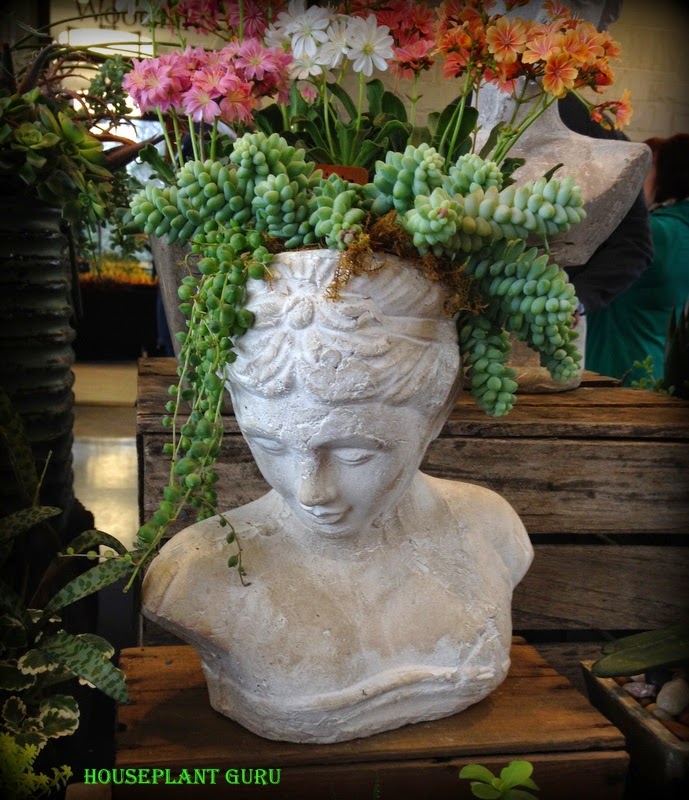
I will leave you with this amazing succulent filled head planter. If you would like to see more pictures of this show, go to my Pinterest page here.
To find out more about the society, find their website here. I hope this has encouraged you to start growing some cactus and succulents if you don't already.

Mixed succulent head planter